History
Likely native to southwestern Asia, and brought to Britain by the Romans
Encyclopaedia Britannica’s official onion page is sparing with years, and careful with its maybes. This desk keeps the maybes. [source]
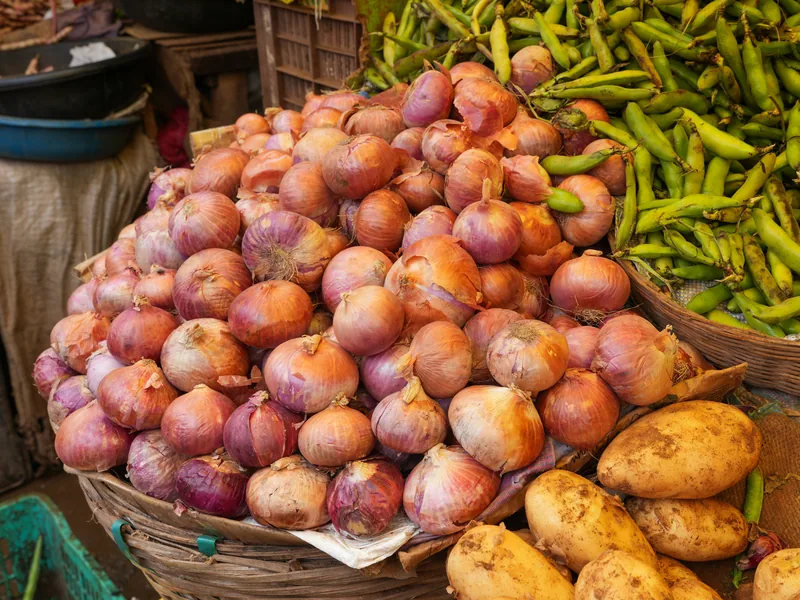
The onion “is likely native to southwestern Asia but is now grown throughout the world, chiefly in the temperate zones.” [source] “Onions are among the world’s oldest cultivated plants.” They “were probably known in India, China, and the Middle East before recorded history.” [source] Official wording also says the name “is probably derived from the Latin unus, meaning ‘one.’” [source]
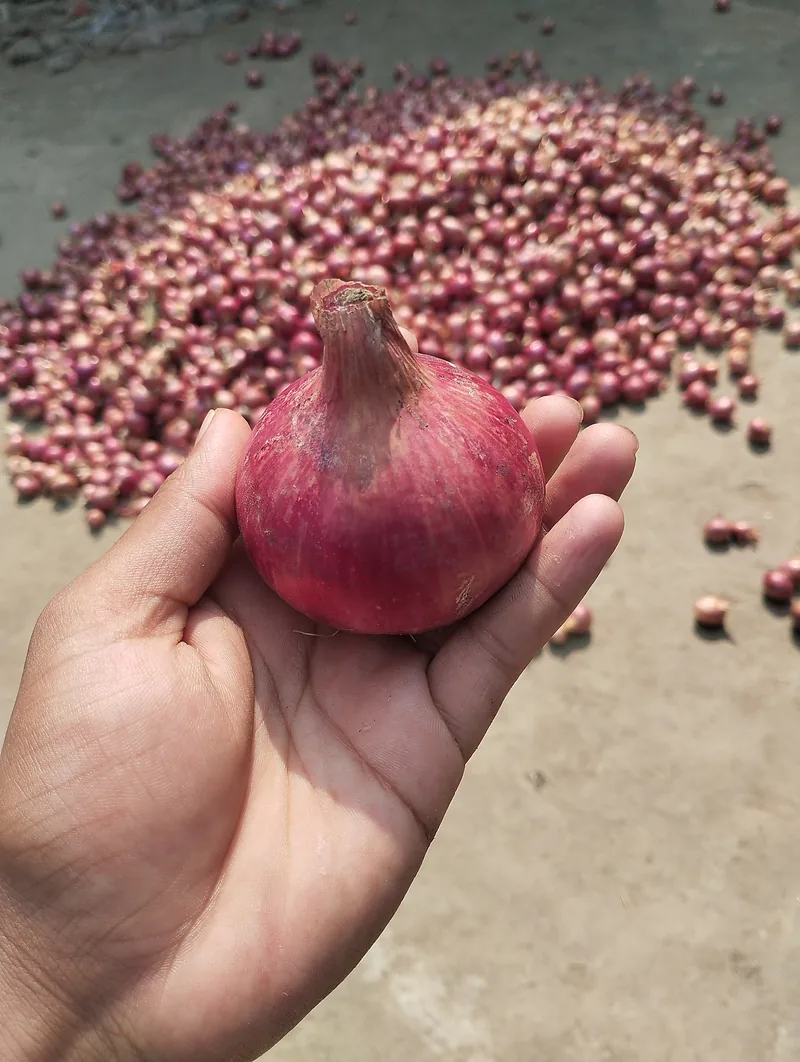
“Ancient Egyptians regarded the spherical bulb as a symbol of the universe, and the concentric spheres of the Aristotelian cosmos were also likened to an onion.” [source] Those are official historical sentences, not a claim that this desk has inspected a tomb painting. “The Romans introduced the onion to Britain.” [source] The Society’s Allium cepa profile, under Native to GB/Ireland, simply says No. [source] The two official answers stay on their own lines: one is a story of introduction, the other is a native-range tick-box.
“In the New World, Native Americans added a highly pungent wild onion (Allium canadense) to their stews.” [source] That official sentence is about a different species, and is not used here to relabel Allium cepa. “Curative powers have been attributed to onions throughout the centuries,” including, in official wording, folk uses for colds, earaches, laryngitis, animal bites, burns and warts. [source] This site quotes that history and does not offer it as advice. Official wording also says onions “are low in nutrients but are valued for their flavour.” [source] The tears, at least, have a chemical official sentence: a sulfur-rich volatile oil, released in peeling or chopping. [source]
Enjoyed this desk of sets, shallots, and a store that wants the light?
No pop-ups. No intrusive advertising. Just interesting stuff. A little support helps the next vegetables.im site get built.