Discoveries
Things the official pages say, that are easy to miss
A desk of three growing guides, a plant profile and an encyclopaedia page is already a small museum of surprises.
Do not store them in the dark
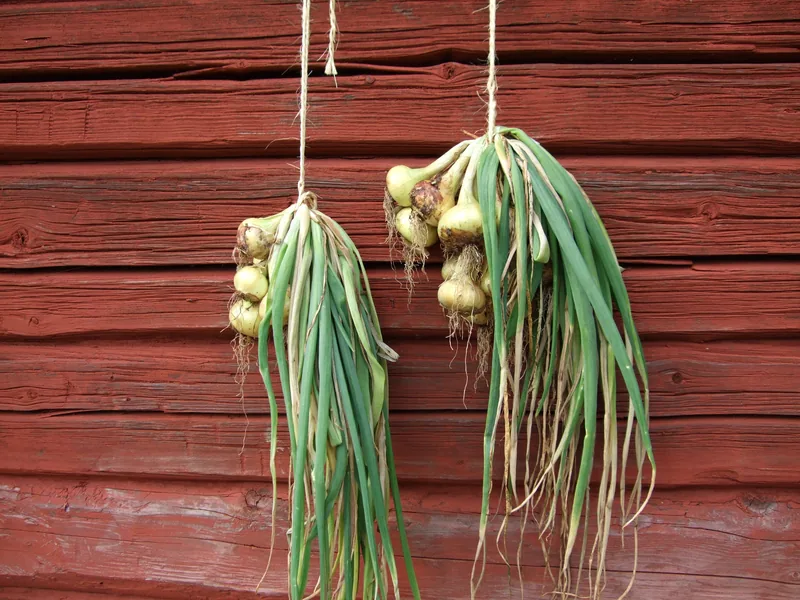
The Society’s onion guide, and the shallot guide, both say it plainly: keep the dried bulbs in the light. “Don’t store in the dark, as this encourages sprouting.” [source] [source] It is the opposite of the advice many people remember from a potato sack.
Bending the leaves is no longer recommended
“Although it’s sometimes suggested to bend over the foliage or gently lift the bulbs to break the roots, this is no longer recommended.” [source] The official sign is yellowing and toppling. Harvest before the foliage dies down completely.
A sulfur-rich volatile oil
The tears are official. Encyclopaedia Britannica says the pungency “results from the sulfur-rich volatile oil it contains; the release of this oil during peeling or chopping brings tears to the eyes.” [source]
Two official heights
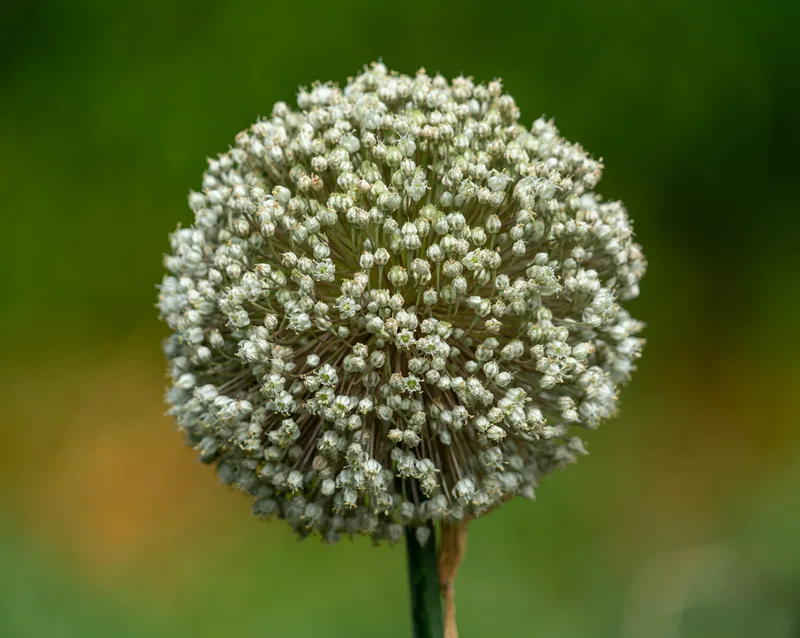
Flower stalks of 75–180 cm (2.5–6 feet) on the Britannica page. [source] A profile maximum of 0.1–0.5 metres on the Society’s Allium cepa page. [source] The figures stay on their own lines.
Two official scallion stories
The Society groups salad onions, spring onions and scallions as one crop, including Allium cepa or Allium fistulosum. [source] Britannica gives spring onions at 25–38 mm, and green onions, also called scallions, at 13 mm or less. [source]
One set, a cluster
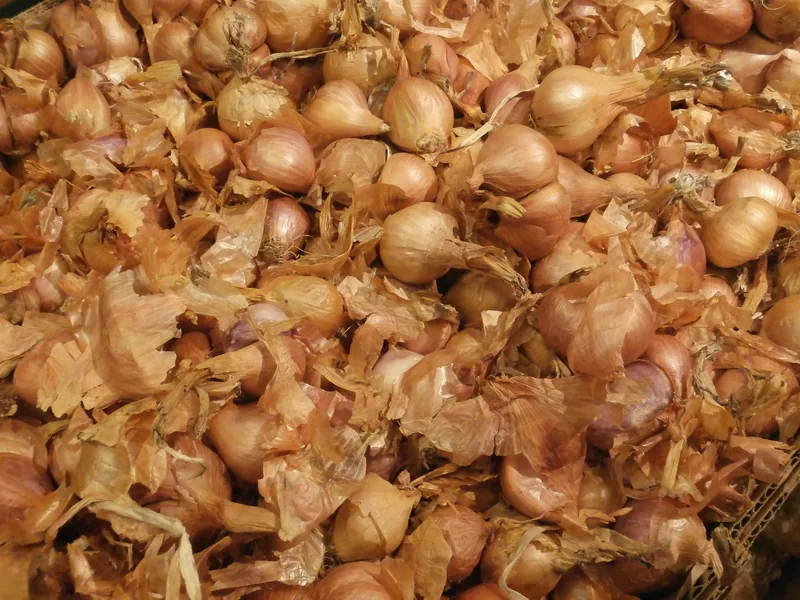
In the shallot guide, “each set produces a cluster of new bulbs, whereas a seed produces just one.” [source] Dried, they generally store for at least six to eight months.
A native range, and a no
Britannica: likely native to southwestern Asia; the Romans introduced the onion to Britain. [source] The profile, under Native to GB/Ireland: No. [source]
The name, probably
Official wording says the name “is probably derived from the Latin unus, meaning ‘one.’” [source] The “probably” is part of the fact.
Enjoyed this desk of sets, shallots, and a store that wants the light?
No pop-ups. No intrusive advertising. Just interesting stuff. A little support helps the next vegetables.im site get built.