onions.vegetables.im
From a small set to a store that wants the light
Grow them from small sets or from seed, plant in spring or, for an earlier crop, in autumn, and dry them properly if you want a tray that lasts. The Royal Horticultural Society keeps official growing guides for onions, shallots and salad onions. Encyclopaedia Britannica has its own official page, with a history, a flower, and a reason the kitchen makes you cry.
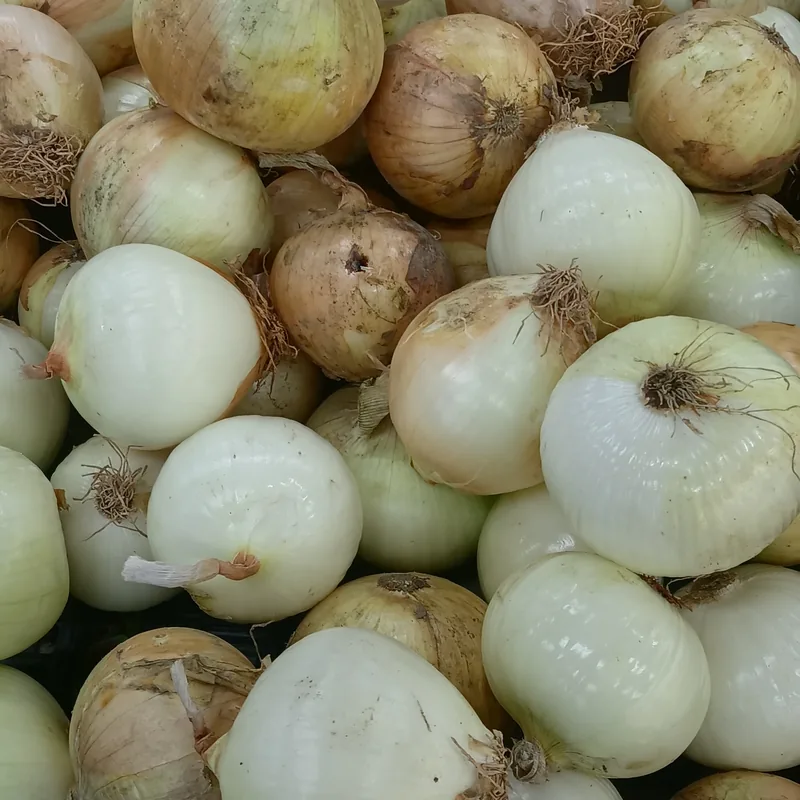
The Society says there are many varieties, “producing yellow, white or red onions, some spicy and tangy, others mild and sweet.” [source] Sets — immature bulbs — are “the easiest and fastest way to grow them.” [source] Seed takes more care, costs less, and offers more varieties, though “onion seeds don’t stay viable for long.” [source]
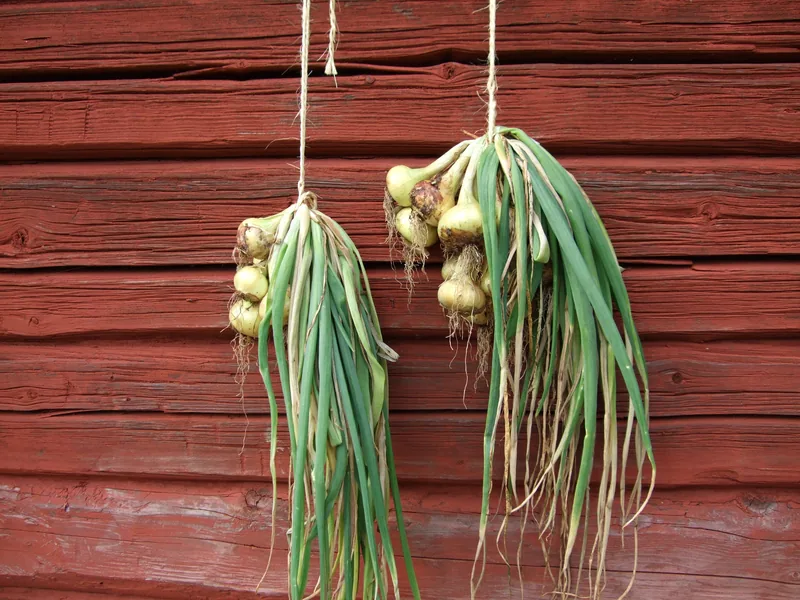
When the foliage yellows and topples, it is time to lift, not to bend the leaves over. That old suggestion, the Society says, “is no longer recommended.” [source] Dry the bulbs for about two weeks, then keep them in the light. Darkness, official wording says, encourages sprouting. [source]
Which onion?
Pick a story. The Royal Horticultural Society keeps official growing guides for onions, shallots and salad onions. Encyclopaedia Britannica has its own official page, with a history, a flower, and a reason the kitchen makes you cry. Official figures that disagree are kept on their own lines.
Encyclopaedia Britannica, on its own official page, still has room for wonder: a spherical flower cluster on a leafless stalk of 75–180 cm, a sulfur-rich volatile oil that brings tears to the eyes, and a plant “likely native to southwestern Asia,” introduced to Britain by the Romans. [source] Those official sentences sit beside the Society’s growing year, not on top of it. The field notes keep the figures that do not quite agree — two official heights, two official scallion stories, two official ways to grow a crop — on their own lines.
Open the desk Free fact sheets
Sets, or seed
The easiest official method in a British garden, and the official commercial method from small black seeds, kept on their own lines.
Lift, dry and store
No longer bend the leaves. Two weeks of drying, then a light, cool, airy place.
Shallots
One set makes a cluster of new bulbs, and a dried crop that generally stores for six to eight months.
Where onions come from
Likely native to southwestern Asia; the Romans, official wording says, introduced them to Britain.
The flower head
A spherical cluster of small greenish white flowers, on a leafless stalk official wording measures in feet.
A quiz and a timeline
Ten questions from the official wording, and a short official history.
Enjoyed this desk of sets, shallots, and a store that wants the light?
No pop-ups. No intrusive advertising. Just interesting stuff. A little support helps the next vegetables.im site get built.